Tuesday, February 16, 2010


Monday, February 15, 2010
Visa Issues: The Continuing Saga of the Stolen Passport.
When my passport was stolen, I filled out a police report, went to the US embassy to apply for a new passport. The embassy was, of course, beautiful with benches to sit on while you waited and photographs of the Golden Gate Bridge and Yellowstone National Park hanging on the walls. The process was organized and efficient as they quickly entered my old passport number into the system. I had a new passport within 7 days. I was never so proud- or at least grateful- to be an American.
Then it was time to get my Visa replaced, since it had been in the stolen passport. I brought the new passport along with my full original visa application, police affidavit AND a copy of my old visa to Department of Home Affairs. I asked which queue to stand in, someone point, I wait there for 3 hours. I got to the desk and the woman took my things, entered the number of the visa and said, "We have no record of your visa. You need to apply for a new visa. Stand in that queue."
Knowing I could not handle anymore for the day, I left. I returned the following day to stand application queue. When I got to the front, I handed her the application. She looked at it while I start the conversation.
[Back and forth of a typical SA greeting omitted]
Me: My passport and the visa inside it was stolen. I have the police affidavit here. I just need a replacement visa put in my new passport.
Lady: where is the receipt from your deposit?
Me: what deposit?
Lady: You need to make a R7000 deposit ($1000) before we give you a visa.
Me: That can't be right. I've never made that deposit before when i got my visa.
Lady: well you have to.
Me: It just doesn't makes sense. I paid $70 to get the visa in the states.
Lady: well here you pay R7000.
Me: What? Why.
Lady: In case they need to deport you. You can make the deposit in that queue (she points.)
Me: No. I am not making a R7000 deposit. It doesn't make sense.
Lady: You get it back. from your Embassy.
Me: (certain if I made a deposit in SA DHA I would NEVER see it again.) It just doesn't make sense. I already HAVE a visa I just need a replacement copy of it for my new passport. Can't you call the consulate in Chicago, USA and just verify it?
Lady: No. We can't do that. We can't make calls from here.
Me: Ok. So there is no way to just get a replacement?
Lady: (looks at my stuff. looks at copy of my visa. looks at police report) Oh. You just need RE-ISSUING. Fill out this form.
See, I didn't know the word "Re-issuing" which is apparently the secret code word.
So I filled out form. She handed me a letterhead paper filled out with my name and birthday as proof-of-application and then tells me to come back in 30 working days to redeem my visa. I got an SMS the next day saying the DHA has received my visa application and gives me reference number and a number to call for inquiries. That was in November.
I returned to pick up my Visa in January, 45 working days after I submitted the application. I got there at opening hours so, luckily, I ddidn't have to wait long in line. The woman at the desks asked my surname and, with her finger, traced down a list of hundreds of names in a stapled packet of paper. The names were not in alphabetical order or in any other order. When she got to the last page, she took my proof of application, stamped it with a date stamp and said, "Its not ready yet." Since miraculously, no one is in line behind me, I continue my inquiry.
Me: Oh. OK. But it hasn't been declined?
Lady: No. It isn't ready.
Me: Would you know if it had been declined from that paper?
Lady: your name isn't on here.
Me: Alright. I have a reference number. Is there some way we can check its progress or see when it might be done?
Lady: No. Come back in 2 weeks.
Me: Yes. I will.
At this point, I laughed. Honestly, I shocked myself at my lack of frustration or homesickness. I'd honestly gone in expecting it not to be ready, though I'd waited past the day it was supposed to be done. My good humor most likely was aided by not having to wait in a long queue (a fortune I would never again know.) But overall, though annoyed, I was satisfied with myself for my reaction and felt like I was getting good at South Africa.
However...
4 weeks later (last week) I returned to DHA. It was 30 something degrees C outside and the heat inside was oppressive. We were about 100 people squeezed into a tiny room. It smelled like body odor and people were rubbing up against me. The White woman behind me asked me to hold her place in line for while she ran for air. When she snuck back in line and thanked me, we got looks of rage from the other people and heard a man mumble, "Acht! White People!" The woman in front of me was holding a child who pulled out mom's breast and started sucking away, a clear breech of cultural norms in SA (so don't try to pull that one on me.) Given the nature of the queue, she was likely foreign. Yes, the feminist-hippie in me says, "Its natural and beautiful." But the girl-in-a-hot-stuffy-room-waiting-in-a-queue-for-the-4th-time in me says, "Really?! Now I have exert the effort to not be awkward. I have no where to face but forward and now I figure out to avoid looking while not seeming like I'm trying not to look." The old man behind me was so close to me that anytime there was any movement in the queue, his crotch hit my leg. Part of the reason I stuck up for white lady while she squeezed back into her spot in the queue to intercept the old man junk's proximity. It was the longest 2.5 hours yet.
When I got to the front of the line, the lady checked her non-alphabetical order print out of hundreds of names again. "Not ready!" she said as she stamped my paper again and looked behind me, "Next!"
Now I was concerned and in a helpless voice I asked, "Um. Do you think we can find out if something is wrong? I filed this in November. Its been too long." A different lady took pity, grabs my paper and verifies the submission date. She makes the first lady look at the list of names again, which makes her scowl and snap, "SHE ISN'T ON THE LIST!" Luckily, lady #2 seemed to be on my side and said, "Give me your passport."
I hesitatingly handed it to her. (Rewind to my other SA government experience back in October. I'd gone to the Motor/Traffic Office 2 weeks after applying for a traffic registration number to pick it up as directed. They lost my queue number, so I never got called up. It wasn't until the office was closing that they listened to my pleas that my number had been skipped. They went then to look for the thing I was there to pick up. They asked for my passport and brought it to the back while they "worked on" my application since it had mistakenly not been processed. When someone else asked for my passport, I told them I'd already given it to the guy with the glasses and red shirt. When I saw through the glass him shrugging in response to this person's question, I knew there was a problem. They came back and said, "Did [this other lady] give it back to you?" I told them a stern yet anxious no. They spent the next hour and a half searching for the passport in the back. Funny part is, when the found it, I tucked it safely back in my wallet with a relief. Later that day, before I stopped at home to drop off my passport, I was mugged and my wallet was stolen. Brilliant. God love SA.) Back to DHA, a few moments later, she came back with my passport.
Lady: It isn't ready. Come back.
Me: Is there some way to tell if it is at least being processed? It has been too long.
Lady: We don't have the applications here. They go to a different office so we can't check. (She looks at my puppy dog eyes and generously grabs a pen) Here. (She writes a FAX number on the back of the sheet.) This is the fax number of the place where the applications go. You can fax this [proof of application] sheet. Just fax it to them. Just this paper.
I thank her and leave, though unsure of (1) how I am going to do with a fax number given that, well, I live in a dorm room and don't have a phone line, much less a fax machine; (2) what will happen when I do send a fax since generally faxes are kind of a one-way deliverance of information; and (3) what I should do in the meantime without a visa. I am sure the application has been lost. I've done everything I can. I have a copy of my old visa, a police affidavit that it was stolen, and proof of application and status checking a new one. That might be good enough to plead with if needed. Then again, I am technically on a tourist visa which is going to expire on April 6th which result in me getting fines for overstaying that Visa when I leave. I'd cross the border to Botswanna or Swaziland, but border hopping is frowned upon and they may give me problems (given my luck). The recommendation is to fly out at least 2 countries away for at least a week... an expensive and inconvenient trip just to return for 3 weeks. I am not sure what to do.
The worst part is trying to decipher what exactly this proof-of-application says about what I should do while I wait for my visa:
1. The onus rests with you to enquire (YES! THIS SPELLING!) about the outcome of the application on/after 30 working days.
2. Submit your passport together with the receipt to obtain endorsement.
3. If you have applied for permit to take up employment/study, you should note that he receipt is not a work/study permit. You must therefore await approval of your application before commencing any work/study activity.
4. Please note that if your application is not successful, you have to leave the Republic of South Africa on/before the date notified to you in writing my the Department. Should you fail to do so, you will be dealt with as a prohibited person in terms of Section 26 (7) of the said Act.
5. You are requested to await the outcome of your application before you leave the Republic of South Africa. On your return, please ensure that you are in possession of a valid work permit.
Aside from the fact that these instructions do not take into account the incompetency and inefficiency of SA in general, they also need a special clause:
6. If you are Andrea Dean, South Africa hates you. However, since you are spending American money here, we prefer that you stick around. Therefore, we are going to make your life fairly difficult and sad while giving you just enough hope to get through it. Therefore, we will leave you guessing about your Visa application in order to keep you confused and miserable, without just plain kicking you out. Good luck.
(By the way, I've since sent the fax with a big note on the top that says "PLEASE CALL ### REGARDING THIS APPLICATION." I, of course, have heard nothing.)
New Update: This morning I called the number provided and gave them my reference number. The woman told me my application is still at the place for which I applied for it, i.e. the Department of Home Affairs. "You must go there and ask for it."
Me: But the told me you had it in the main office and that I needed to contact you.
Lady: No. It shows it hasn't left the office of application.
Me: But I submitted it in November. Is it lost?
Lady: No. It is in the system. So it isn't lost. It is just still there. Go ask the immigrations officer.
Me: I was there last week. They looked for it. It wasn't there.
Lady: Just go back.
Me: Thank you for your help.
Then it was time to get my Visa replaced, since it had been in the stolen passport. I brought the new passport along with my full original visa application, police affidavit AND a copy of my old visa to Department of Home Affairs. I asked which queue to stand in, someone point, I wait there for 3 hours. I got to the desk and the woman took my things, entered the number of the visa and said, "We have no record of your visa. You need to apply for a new visa. Stand in that queue."
Knowing I could not handle anymore for the day, I left. I returned the following day to stand application queue. When I got to the front, I handed her the application. She looked at it while I start the conversation.
[Back and forth of a typical SA greeting omitted]
Me: My passport and the visa inside it was stolen. I have the police affidavit here. I just need a replacement visa put in my new passport.
Lady: where is the receipt from your deposit?
Me: what deposit?
Lady: You need to make a R7000 deposit ($1000) before we give you a visa.
Me: That can't be right. I've never made that deposit before when i got my visa.
Lady: well you have to.
Me: It just doesn't makes sense. I paid $70 to get the visa in the states.
Lady: well here you pay R7000.
Me: What? Why.
Lady: In case they need to deport you. You can make the deposit in that queue (she points.)
Me: No. I am not making a R7000 deposit. It doesn't make sense.
Lady: You get it back. from your Embassy.
Me: (certain if I made a deposit in SA DHA I would NEVER see it again.) It just doesn't make sense. I already HAVE a visa I just need a replacement copy of it for my new passport. Can't you call the consulate in Chicago, USA and just verify it?
Lady: No. We can't do that. We can't make calls from here.
Me: Ok. So there is no way to just get a replacement?
Lady: (looks at my stuff. looks at copy of my visa. looks at police report) Oh. You just need RE-ISSUING. Fill out this form.
See, I didn't know the word "Re-issuing" which is apparently the secret code word.
So I filled out form. She handed me a letterhead paper filled out with my name and birthday as proof-of-application and then tells me to come back in 30 working days to redeem my visa. I got an SMS the next day saying the DHA has received my visa application and gives me reference number and a number to call for inquiries. That was in November.
I returned to pick up my Visa in January, 45 working days after I submitted the application. I got there at opening hours so, luckily, I ddidn't have to wait long in line. The woman at the desks asked my surname and, with her finger, traced down a list of hundreds of names in a stapled packet of paper. The names were not in alphabetical order or in any other order. When she got to the last page, she took my proof of application, stamped it with a date stamp and said, "Its not ready yet." Since miraculously, no one is in line behind me, I continue my inquiry.
Me: Oh. OK. But it hasn't been declined?
Lady: No. It isn't ready.
Me: Would you know if it had been declined from that paper?
Lady: your name isn't on here.
Me: Alright. I have a reference number. Is there some way we can check its progress or see when it might be done?
Lady: No. Come back in 2 weeks.
Me: Yes. I will.
At this point, I laughed. Honestly, I shocked myself at my lack of frustration or homesickness. I'd honestly gone in expecting it not to be ready, though I'd waited past the day it was supposed to be done. My good humor most likely was aided by not having to wait in a long queue (a fortune I would never again know.) But overall, though annoyed, I was satisfied with myself for my reaction and felt like I was getting good at South Africa.
However...
4 weeks later (last week) I returned to DHA. It was 30 something degrees C outside and the heat inside was oppressive. We were about 100 people squeezed into a tiny room. It smelled like body odor and people were rubbing up against me. The White woman behind me asked me to hold her place in line for while she ran for air. When she snuck back in line and thanked me, we got looks of rage from the other people and heard a man mumble, "Acht! White People!" The woman in front of me was holding a child who pulled out mom's breast and started sucking away, a clear breech of cultural norms in SA (so don't try to pull that one on me.) Given the nature of the queue, she was likely foreign. Yes, the feminist-hippie in me says, "Its natural and beautiful." But the girl-in-a-hot-stuffy-room-waiting-in-a-queue-for-the-4th-time in me says, "Really?! Now I have exert the effort to not be awkward. I have no where to face but forward and now I figure out to avoid looking while not seeming like I'm trying not to look." The old man behind me was so close to me that anytime there was any movement in the queue, his crotch hit my leg. Part of the reason I stuck up for white lady while she squeezed back into her spot in the queue to intercept the old man junk's proximity. It was the longest 2.5 hours yet.
When I got to the front of the line, the lady checked her non-alphabetical order print out of hundreds of names again. "Not ready!" she said as she stamped my paper again and looked behind me, "Next!"
Now I was concerned and in a helpless voice I asked, "Um. Do you think we can find out if something is wrong? I filed this in November. Its been too long." A different lady took pity, grabs my paper and verifies the submission date. She makes the first lady look at the list of names again, which makes her scowl and snap, "SHE ISN'T ON THE LIST!" Luckily, lady #2 seemed to be on my side and said, "Give me your passport."
I hesitatingly handed it to her. (Rewind to my other SA government experience back in October. I'd gone to the Motor/Traffic Office 2 weeks after applying for a traffic registration number to pick it up as directed. They lost my queue number, so I never got called up. It wasn't until the office was closing that they listened to my pleas that my number had been skipped. They went then to look for the thing I was there to pick up. They asked for my passport and brought it to the back while they "worked on" my application since it had mistakenly not been processed. When someone else asked for my passport, I told them I'd already given it to the guy with the glasses and red shirt. When I saw through the glass him shrugging in response to this person's question, I knew there was a problem. They came back and said, "Did [this other lady] give it back to you?" I told them a stern yet anxious no. They spent the next hour and a half searching for the passport in the back. Funny part is, when the found it, I tucked it safely back in my wallet with a relief. Later that day, before I stopped at home to drop off my passport, I was mugged and my wallet was stolen. Brilliant. God love SA.) Back to DHA, a few moments later, she came back with my passport.
Lady: It isn't ready. Come back.
Me: Is there some way to tell if it is at least being processed? It has been too long.
Lady: We don't have the applications here. They go to a different office so we can't check. (She looks at my puppy dog eyes and generously grabs a pen) Here. (She writes a FAX number on the back of the sheet.) This is the fax number of the place where the applications go. You can fax this [proof of application] sheet. Just fax it to them. Just this paper.
I thank her and leave, though unsure of (1) how I am going to do with a fax number given that, well, I live in a dorm room and don't have a phone line, much less a fax machine; (2) what will happen when I do send a fax since generally faxes are kind of a one-way deliverance of information; and (3) what I should do in the meantime without a visa. I am sure the application has been lost. I've done everything I can. I have a copy of my old visa, a police affidavit that it was stolen, and proof of application and status checking a new one. That might be good enough to plead with if needed. Then again, I am technically on a tourist visa which is going to expire on April 6th which result in me getting fines for overstaying that Visa when I leave. I'd cross the border to Botswanna or Swaziland, but border hopping is frowned upon and they may give me problems (given my luck). The recommendation is to fly out at least 2 countries away for at least a week... an expensive and inconvenient trip just to return for 3 weeks. I am not sure what to do.
The worst part is trying to decipher what exactly this proof-of-application says about what I should do while I wait for my visa:
1. The onus rests with you to enquire (YES! THIS SPELLING!) about the outcome of the application on/after 30 working days.
2. Submit your passport together with the receipt to obtain endorsement.
3. If you have applied for permit to take up employment/study, you should note that he receipt is not a work/study permit. You must therefore await approval of your application before commencing any work/study activity.
4. Please note that if your application is not successful, you have to leave the Republic of South Africa on/before the date notified to you in writing my the Department. Should you fail to do so, you will be dealt with as a prohibited person in terms of Section 26 (7) of the said Act.
5. You are requested to await the outcome of your application before you leave the Republic of South Africa. On your return, please ensure that you are in possession of a valid work permit.
Aside from the fact that these instructions do not take into account the incompetency and inefficiency of SA in general, they also need a special clause:
6. If you are Andrea Dean, South Africa hates you. However, since you are spending American money here, we prefer that you stick around. Therefore, we are going to make your life fairly difficult and sad while giving you just enough hope to get through it. Therefore, we will leave you guessing about your Visa application in order to keep you confused and miserable, without just plain kicking you out. Good luck.
(By the way, I've since sent the fax with a big note on the top that says "PLEASE CALL ### REGARDING THIS APPLICATION." I, of course, have heard nothing.)
New Update: This morning I called the number provided and gave them my reference number. The woman told me my application is still at the place for which I applied for it, i.e. the Department of Home Affairs. "You must go there and ask for it."
Me: But the told me you had it in the main office and that I needed to contact you.
Lady: No. It shows it hasn't left the office of application.
Me: But I submitted it in November. Is it lost?
Lady: No. It is in the system. So it isn't lost. It is just still there. Go ask the immigrations officer.
Me: I was there last week. They looked for it. It wasn't there.
Lady: Just go back.
Me: Thank you for your help.
Sunday, February 7, 2010
Frank Rich on "Don't Ask, Don't Tell."
Smoke the Bigots Out of the Closet
I must say, especially in terms of homophobia, nothing makes you appreciate the progressiveness of even the most backwards US citizens like living in South Africa. Could this really be the beginning of a new era? Please let me come home to a country with a little less hate and a little more wisdom.
I must say, especially in terms of homophobia, nothing makes you appreciate the progressiveness of even the most backwards US citizens like living in South Africa. Could this really be the beginning of a new era? Please let me come home to a country with a little less hate and a little more wisdom.
Thursday, February 4, 2010
A Breath of Mamelodi
For the last few weeks, I've been passing my days at Stanza Bopape Community Health Center's Antenatal Clinic (ANC) where I am trying to recruit participants for my study. Before I get into specifics about Stanza, I will describe the setting in which it functions.
Stanza is in a township of Pretoria called Mamelodi, Mamelodi East to be exact. This means, the clinic is about a 30 minute drive out of Pretoria proper, where I live. This drive is the most stressful part of my day due to: the herds of mini-bus taxi's who rule the road here (though not with any particular driving skills or courtesy,) the HUNDREDS of pedestrians lining the sidewalks and crossing the streets, the speed bumps every 100 meters or so (though the road is marked 70 km/hr), the beggers/sellers at the robots (traffic lights) knocking on the window and pushing me to buy bags of frozen juice, and unbearable heat in my non-air-conditioned car. However, the drive also allows me time to reflect and since during this I'm pulling away from my nice neighborhood in Pretoria, through the commercial center of Mamelodi, past the newer housing developments, and to the edge of the shanties of Mamelodi East where Stanza sits, the about of material on which to reflect is substantial.
While avoiding being presumptuous, I will guide your thoughts with the following anology: Mamelodi is to Pretoria as Soweto is to Johannesburg. Listen, Mamelodi is no Soweto but, then again, Pretoria is no Johannesburg either. So it works at least for those of you who are familiar with the establishment of Southwest Townships (SoWeTo) and the political history within them. Let me explain.
Mamelodi was established in 1953, just five years after the government of South Africa adopted Apartheid as official policy. (Clarification: Though racial segregation had been an colonial effort particularly since the arrival of the British in the early 1800s, the official policy of "Apartheid" did not begin until the 1948 election victory of the National Party.) Apartheid legislation ensued which would eventually include racial classification of all residents, deprivation of citizenship, forced removals, as well as a list of other progressively more horrific policies, and worse, ignoring of actions that went beyond policies.
Townships (like Mamelodi) were known as "group areas" and were places outside of urban centers (like Pretoria) designated strictly for Black residency. Townships, however, were founded as a solution to the Apartheid "problem" of having too many Black people in White areas, or at least areas where Whites wanted to be. However, these townships were a compromise of sorts and one which would ultimately prove to be a fatal to the Apartheid regime.
Actually, the government's ideal solution to this "problem" was much more extreme (yes. it is possible.) In accordance with the promises the National Party made during the election race, Apartheid dug its heals in the dirt almost immediately with the Bantu Authorities Act in 1951. This act aimed to set up "homelands" for the native population called "Bantustans." (I am still unclear as to whether this term was intentionally derogatory at the time or if it has become that as a result of the failure of these areas to prosper.) Basically, the goal was to move 100% of South African Blacks to these lands. In 1951, they depended entirely on the South African economy, but in 1959, the government stated they would be self-governing and independent. Those is positions of authority cited gracious and enlightened reasoning behind this structure, such as that it was the "Africans' land" and they should "rule" according to their "tradition and culture."
This rhetoric worked. To this day, I have had young South Africans tell me that the "idea" behind Apartheid really wasn't that bad: "'Apartheid' just means 'Separate,' Andrea. Look, they just wanted to set up separate places where Africans would live and whites would live. It made sense at the time, it just didn't work."
(This, um, 'fact' is usually given as an attempt to prove to me that America and the rest of the world's media has vastly misrepresented South African history and that as an American, I know nothing. I will take this opportunity to tell my South African readers that this conversation has happened at least 4 times since I've been here. It does deserve a place in the blog. Though I do agree with you that present day white consciousness in SA deserves its own entry, so I promise to discuss it further there.)
Though the rhetoric was as beautiful as it was when White America granted American Indians reservations, in reality, the Bantustan set-up was as ugly as it too. First of all, by deeming these Bantustans "sovereign nations" where Blacks were required to live based on their tribal identity, the government was able to strip Blacks of their South African citizenship and replacing it with that of the Bantustan. No other country recognized these nations' independence. Gracious and Enlightened? I don't think so. If you aren't yet convinced, how do you feel about total area of the Bantustans equated to 13% of the total country's land where 90% of the population was supposed to live? If I need to start discussing the quality of the land, let me know.
So millions of people were relocated to the poor, barren, rural Bantustans. However, even at their peak only about 50% of all native S Africans lived there. The rest persisted in the cities. As you can imagine, it was an impossible task to deport all those people! But more importantly, the cities depended on Black labor, Jo'burg is a mining town and, furthermore, what is the point of being a colonialist if you don't have cheap domestic labor? So they had a dilemma, a we-need-them-close-but-don't-want-too-close dilemma. And hence the urban townships were born.
Areas were designated for Black townships several miles outside of the city, preferably far enough away to forget about after the gardener left the house. Forced removals began. In Cape Town, District Six was vibrant neighborhood in the middle of the city which evacuated under the guise of a "plague outbreak" and its residents were dumped in Cape Flats, outside the city and out-of-sight. Officials also cited "housing regulations:" inspecting neighborhoods and saying that because of this-or-that, these houses were "unfit" for residence. These concerned officials closed the houses and shooed the occupants off to the designated group areas, where of course, generous officials overlooked the fact that these places were in squalor, making no move to correct it and letting the Blacks stay anyway. Mostly though, no justification was given because Apartheid was official policy. Within these townships, old neighbors were separated as areas were further segregated along tribal lines. (Answer: Greatest Success of Colonial Rule. Buzz! Answer: What is Divide and Conquer?)
Soweto is obviously the most famous of these townships. My Lonely Planet describes it as "...the biggest, most political, troubled and dynamic township" in the world. And it is probably true. If nothing else, Soweto provides an abbreviated journey through the much larger history of a much larger South Africa. While tourist certainly cheat themselves (not to mention South Africa) by getting their fill by taking a day-tour of Soweto before scooting off to Safari in Kruger, a single breath of Soweto air is full of more life and history than most places could dream of containing within their entirety.
The Soweto story remains core of and the symbol of the rise and fall of Apartheid. It begins, as described, with the relocation of Blacks from various parts and suburbs of Johannesburg to Soweto. As relocation intensified and immigrants moved to the city in search of work, poverty worsened while crowdedness increased. This lead to the emergence of its own culture and identity, followed by the inevitable policalisation of the township and its residents. From educated political leaders (like Nelson Mandela) to school children, resistance to apartheid and the fight for equality arose. With 1976 protests, came war (of sorts) and with war came global attention and eventually came the end of Apartheid and, well, peace.
Armed with even a minimal amount of knowledge of Apartheid and townships (above,) visiting a township like Soweto or Mamelodi is an experience that reaches beyond the present, beyond, even, your own existence. For example, just frustration I have as I start my 30 minute drive, reminds me that I am heading into a place intentionally distanced from White Pretoria. Then, I arrive at my destination: Stanza Bopope Community Health center, named for Johannes (Stanza) Bopape who was born and raised in the area in 1961 becoming a hero for the cause when he was tortured and murdered for his political activism by the Security Police. Everyday, something as simple as my trip to work carries me through the xenophobic motivations for Apartheid to the courage and unity it took to end it.
However, it is the life of Mamelodi, the ongoing activity and changing nature, that tell a story which can't be written in a history book. As I drive into Mamelodi, new low-cost, brick Reconstruction and Development houses line the streets yet East of the clinic, hundreds of shacks with tin roofs remain clustered together. I see teenagers in school uniforms walking in front of a sign which says "Hungary? Come Eat Meet." Underneath "Safe Abortions" signs rest an individual wasting away, most likely from HIV/AIDS...
Townships like Mamelodi and Soweto allow the naked eye to literally see humanity in a manner which can usually only be integrated and processed by the soul. The past and present and even the window to the future captivates and demonstrates the harm that comes from hate, greed and division as well as the progress inevitable with unity, determination, awareness and hope. It is all there, all the history, all the life and it is hard to miss.
Stanza is in a township of Pretoria called Mamelodi, Mamelodi East to be exact. This means, the clinic is about a 30 minute drive out of Pretoria proper, where I live. This drive is the most stressful part of my day due to: the herds of mini-bus taxi's who rule the road here (though not with any particular driving skills or courtesy,) the HUNDREDS of pedestrians lining the sidewalks and crossing the streets, the speed bumps every 100 meters or so (though the road is marked 70 km/hr), the beggers/sellers at the robots (traffic lights) knocking on the window and pushing me to buy bags of frozen juice, and unbearable heat in my non-air-conditioned car. However, the drive also allows me time to reflect and since during this I'm pulling away from my nice neighborhood in Pretoria, through the commercial center of Mamelodi, past the newer housing developments, and to the edge of the shanties of Mamelodi East where Stanza sits, the about of material on which to reflect is substantial.
While avoiding being presumptuous, I will guide your thoughts with the following anology: Mamelodi is to Pretoria as Soweto is to Johannesburg. Listen, Mamelodi is no Soweto but, then again, Pretoria is no Johannesburg either. So it works at least for those of you who are familiar with the establishment of Southwest Townships (SoWeTo) and the political history within them. Let me explain.
Mamelodi was established in 1953, just five years after the government of South Africa adopted Apartheid as official policy. (Clarification: Though racial segregation had been an colonial effort particularly since the arrival of the British in the early 1800s, the official policy of "Apartheid" did not begin until the 1948 election victory of the National Party.) Apartheid legislation ensued which would eventually include racial classification of all residents, deprivation of citizenship, forced removals, as well as a list of other progressively more horrific policies, and worse, ignoring of actions that went beyond policies.
Townships (like Mamelodi) were known as "group areas" and were places outside of urban centers (like Pretoria) designated strictly for Black residency. Townships, however, were founded as a solution to the Apartheid "problem" of having too many Black people in White areas, or at least areas where Whites wanted to be. However, these townships were a compromise of sorts and one which would ultimately prove to be a fatal to the Apartheid regime.
Actually, the government's ideal solution to this "problem" was much more extreme (yes. it is possible.) In accordance with the promises the National Party made during the election race, Apartheid dug its heals in the dirt almost immediately with the Bantu Authorities Act in 1951. This act aimed to set up "homelands" for the native population called "Bantustans." (I am still unclear as to whether this term was intentionally derogatory at the time or if it has become that as a result of the failure of these areas to prosper.) Basically, the goal was to move 100% of South African Blacks to these lands. In 1951, they depended entirely on the South African economy, but in 1959, the government stated they would be self-governing and independent. Those is positions of authority cited gracious and enlightened reasoning behind this structure, such as that it was the "Africans' land" and they should "rule" according to their "tradition and culture."
This rhetoric worked. To this day, I have had young South Africans tell me that the "idea" behind Apartheid really wasn't that bad: "'Apartheid' just means 'Separate,' Andrea. Look, they just wanted to set up separate places where Africans would live and whites would live. It made sense at the time, it just didn't work."
(This, um, 'fact' is usually given as an attempt to prove to me that America and the rest of the world's media has vastly misrepresented South African history and that as an American, I know nothing. I will take this opportunity to tell my South African readers that this conversation has happened at least 4 times since I've been here. It does deserve a place in the blog. Though I do agree with you that present day white consciousness in SA deserves its own entry, so I promise to discuss it further there.)
Though the rhetoric was as beautiful as it was when White America granted American Indians reservations, in reality, the Bantustan set-up was as ugly as it too. First of all, by deeming these Bantustans "sovereign nations" where Blacks were required to live based on their tribal identity, the government was able to strip Blacks of their South African citizenship and replacing it with that of the Bantustan. No other country recognized these nations' independence. Gracious and Enlightened? I don't think so. If you aren't yet convinced, how do you feel about total area of the Bantustans equated to 13% of the total country's land where 90% of the population was supposed to live? If I need to start discussing the quality of the land, let me know.
So millions of people were relocated to the poor, barren, rural Bantustans. However, even at their peak only about 50% of all native S Africans lived there. The rest persisted in the cities. As you can imagine, it was an impossible task to deport all those people! But more importantly, the cities depended on Black labor, Jo'burg is a mining town and, furthermore, what is the point of being a colonialist if you don't have cheap domestic labor? So they had a dilemma, a we-need-them-close-but-don't-want-too-close dilemma. And hence the urban townships were born.
Areas were designated for Black townships several miles outside of the city, preferably far enough away to forget about after the gardener left the house. Forced removals began. In Cape Town, District Six was vibrant neighborhood in the middle of the city which evacuated under the guise of a "plague outbreak" and its residents were dumped in Cape Flats, outside the city and out-of-sight. Officials also cited "housing regulations:" inspecting neighborhoods and saying that because of this-or-that, these houses were "unfit" for residence. These concerned officials closed the houses and shooed the occupants off to the designated group areas, where of course, generous officials overlooked the fact that these places were in squalor, making no move to correct it and letting the Blacks stay anyway. Mostly though, no justification was given because Apartheid was official policy. Within these townships, old neighbors were separated as areas were further segregated along tribal lines. (Answer: Greatest Success of Colonial Rule. Buzz! Answer: What is Divide and Conquer?)
Soweto is obviously the most famous of these townships. My Lonely Planet describes it as "...the biggest, most political, troubled and dynamic township" in the world. And it is probably true. If nothing else, Soweto provides an abbreviated journey through the much larger history of a much larger South Africa. While tourist certainly cheat themselves (not to mention South Africa) by getting their fill by taking a day-tour of Soweto before scooting off to Safari in Kruger, a single breath of Soweto air is full of more life and history than most places could dream of containing within their entirety.

The Soweto story remains core of and the symbol of the rise and fall of Apartheid. It begins, as described, with the relocation of Blacks from various parts and suburbs of Johannesburg to Soweto. As relocation intensified and immigrants moved to the city in search of work, poverty worsened while crowdedness increased. This lead to the emergence of its own culture and identity, followed by the inevitable policalisation of the township and its residents. From educated political leaders (like Nelson Mandela) to school children, resistance to apartheid and the fight for equality arose. With 1976 protests, came war (of sorts) and with war came global attention and eventually came the end of Apartheid and, well, peace.

Armed with even a minimal amount of knowledge of Apartheid and townships (above,) visiting a township like Soweto or Mamelodi is an experience that reaches beyond the present, beyond, even, your own existence. For example, just frustration I have as I start my 30 minute drive, reminds me that I am heading into a place intentionally distanced from White Pretoria. Then, I arrive at my destination: Stanza Bopope Community Health center, named for Johannes (Stanza) Bopape who was born and raised in the area in 1961 becoming a hero for the cause when he was tortured and murdered for his political activism by the Security Police. Everyday, something as simple as my trip to work carries me through the xenophobic motivations for Apartheid to the courage and unity it took to end it.
However, it is the life of Mamelodi, the ongoing activity and changing nature, that tell a story which can't be written in a history book. As I drive into Mamelodi, new low-cost, brick Reconstruction and Development houses line the streets yet East of the clinic, hundreds of shacks with tin roofs remain clustered together.
 I see teenagers in school uniforms walking in front of a sign which says "Hungary? Come Eat Meet." Underneath "Safe Abortions" signs rest an individual wasting away, most likely from HIV/AIDS...
Townships like Mamelodi and Soweto allow the naked eye to literally see humanity in a manner which can usually only be integrated and processed by the soul. The past and present and even the window to the future captivates and demonstrates the harm that comes from hate, greed and division as well as the progress inevitable with unity, determination, awareness and hope. It is all there, all the history, all the life and it is hard to miss.
Monday, February 1, 2010
What is it about SA?
So yesterday was the first day of February, which for some reason hit me with tremendous and unexpected force. Like a metric ton of bricks. Suddenly I realized I have a little more than three months left in South Africa. So I spent the day somewhere between anxiety of what will come, trying desperately to form pictures in my mind about what my return to the United States will look like for me, and nostalgia of where I have been, recapping my prior 6 months in South Africa, from the moments which struck me to the general everyday adaptations which have become my life.
I honestly don't know how I feel about being here or how I feel about leaving. I recently had a conversation with a friend after I had my surgery, while my cat was sick in the US and I was waiting through the events of mom's accident and subsequent orthopedic surgery. Keep in mind, its been a tough year and I'd come back from holiday ready to make amends with South Africa and start anew. Almost as soon as I got there, I started feeling those pains in my abdomen. Since then, the efforts to "catch up" and "readjust" after that surgery have been a reminder of the constant obstacles which face me in SA. SA might not get the blame for knocking me off my feet for my surgery, but it did kick me in the face while I was down. Still kicking, though at least I'm back up and can fight back a little. Anyway the conversation went like this:
Andrea: I hate to say it and I've been denying it for months, but I honestly think I might hate this country.
Friend: I don't blame you.
Andrea: I mean, its unbearable: the incessant fear necessary to survive, the unavoidable anger and hate circulating in the air, the false impression of modernness always leading to even greater inefficiency. Its maddening!
Friend: Ha! You sound like a local!
Andrea: Maybe. But the worst part is that I can see all that and say all that but, for reasons beyond comprehension, I do not want to leave. I can't leave.
Friend: Now...(insert a slowly upturning, knowing grin)Now, you sound like a South African!!
As far as I can tell, its true. I rarely meet a South African who isn't, to some degree, critical about the shortcomings of the country and cynical about whether they will get through it. Cited in these ranting are: poverty, AIDS/TB, the unevenly distributed provision of health care, ancient and oppressive views of gender/sex, crime, materialism, corruption, homophobia, lack of service delivery, poor education, poorly educated people, traffic, and so on. Sometimes these opinions manifest as racist ravings which lack reflection or, really, intelligence. Sometimes they are sarcastic jokes with just enough truth to make you laugh and cringe simultaneously. Sometimes it is an apologetic voice that comes through, not out of guilt or embarrassment, just despair. Sometimes it is a mere statement of fact. My mentor once corrected me: "You aren't cursed. You are just experiencing South Africa and learning to live in it the way we all do."
Yet I have only met one person who honestly and truly is looking for a way out. (This particular person is a gay, black man who has had the privilege of spending time in New York. When I blog about homophobia in SA, the fact that he wants to leave will need little explanation.) By far, most people I've met can't think of leaving or at least staying away. This remains a mystery to me.
It isn't a blind pride like we tend to find in the patriots of the USA. South Africans are very much aware of and affected by the turmoil and despair which surrounds them and often express doubt of it improving, even as they feed me the line about SA being a "young country" which needs time to "get better." And it isn't stubbornness either, I don't think. Some of my friends are well traveled and have even lived abroad and enjoyed the first-world comforts (safety, efficiency, predictability) of Britain or the US. But in the end, they genuinely want to be in SA whether or not they can explain it. And no one has even tried the justification that there is enough good to make up for the bad. They laughingly will list the amazing things about the country (the beaches, the friendliness, Cape Town, culture, richness) but no one would even think it was worth bringing out the scale to see how it levels out.

So what is it about this place? Whatever it is, its got me.
I honestly don't know how I feel about being here or how I feel about leaving. I recently had a conversation with a friend after I had my surgery, while my cat was sick in the US and I was waiting through the events of mom's accident and subsequent orthopedic surgery. Keep in mind, its been a tough year and I'd come back from holiday ready to make amends with South Africa and start anew. Almost as soon as I got there, I started feeling those pains in my abdomen. Since then, the efforts to "catch up" and "readjust" after that surgery have been a reminder of the constant obstacles which face me in SA. SA might not get the blame for knocking me off my feet for my surgery, but it did kick me in the face while I was down. Still kicking, though at least I'm back up and can fight back a little. Anyway the conversation went like this:
Andrea: I hate to say it and I've been denying it for months, but I honestly think I might hate this country.
Friend: I don't blame you.
Andrea: I mean, its unbearable: the incessant fear necessary to survive, the unavoidable anger and hate circulating in the air, the false impression of modernness always leading to even greater inefficiency. Its maddening!
Friend: Ha! You sound like a local!
Andrea: Maybe. But the worst part is that I can see all that and say all that but, for reasons beyond comprehension, I do not want to leave. I can't leave.
Friend: Now...(insert a slowly upturning, knowing grin)Now, you sound like a South African!!
As far as I can tell, its true. I rarely meet a South African who isn't, to some degree, critical about the shortcomings of the country and cynical about whether they will get through it. Cited in these ranting are: poverty, AIDS/TB, the unevenly distributed provision of health care, ancient and oppressive views of gender/sex, crime, materialism, corruption, homophobia, lack of service delivery, poor education, poorly educated people, traffic, and so on. Sometimes these opinions manifest as racist ravings which lack reflection or, really, intelligence. Sometimes they are sarcastic jokes with just enough truth to make you laugh and cringe simultaneously. Sometimes it is an apologetic voice that comes through, not out of guilt or embarrassment, just despair. Sometimes it is a mere statement of fact. My mentor once corrected me: "You aren't cursed. You are just experiencing South Africa and learning to live in it the way we all do."
Yet I have only met one person who honestly and truly is looking for a way out. (This particular person is a gay, black man who has had the privilege of spending time in New York. When I blog about homophobia in SA, the fact that he wants to leave will need little explanation.) By far, most people I've met can't think of leaving or at least staying away. This remains a mystery to me.
It isn't a blind pride like we tend to find in the patriots of the USA. South Africans are very much aware of and affected by the turmoil and despair which surrounds them and often express doubt of it improving, even as they feed me the line about SA being a "young country" which needs time to "get better." And it isn't stubbornness either, I don't think. Some of my friends are well traveled and have even lived abroad and enjoyed the first-world comforts (safety, efficiency, predictability) of Britain or the US. But in the end, they genuinely want to be in SA whether or not they can explain it. And no one has even tried the justification that there is enough good to make up for the bad. They laughingly will list the amazing things about the country (the beaches, the friendliness, Cape Town, culture, richness) but no one would even think it was worth bringing out the scale to see how it levels out.

So what is it about this place? Whatever it is, its got me.
Sunday, January 31, 2010
Steve Martin, did I forget something?
(Warning: This blog bears no connection to South Africa, except for that I had this dream here in my dorm room. I wrote it in an email to someone and, since it was written, couldn't help post it for your entertainment.)
Last night i had a dream, that I was doctoring in the hospital. I had on my white coat (which is not a long one, it goes to my hips) but i'd forgotten to wear clothes under it. So I was just trying to make do and hoping no one noticed, because there wasn't much else I could do because I had to see patients. One of my patients was Steve Martin. Apparently (dream knowledge) I'd been taking care of him for a while and he was IN LOVE with me. At the point of arrival in my dream, I was accustomed to his professions of adoration and attempts to hold me captive each time I saw him. This time was no exception and he grabbed my hand from his place in his bed and said something like, "Let's not torture ourselves anymore. You know your 'yes' is the only medicine for me." I gave a professional (and dream-familiar) response, "Steve Martin, I am your doctor. You know that is all I will be to you. This is inappropriate." Then he apologized tearfully, which made me feel bad because, let's admit, Steve Martin is a good guy and fairly attractive for his age! But I remained in doctor-mode and carried on checking the rate at which his fluids were running and going over his at his vital signs chart. Then, I took off my white coat to do an exam and looked down, only then to remember I'd forgotten to wear clothes! And I thought to myself "DAMN! Now Steve Martin is really going to get the wrong idea!!" And he did.
So the dream moves into like a movie-script-like sequence (specifically a made-for-T.V., Daddy-issues, Lifetime movie.) He tried to kiss me or something and I jumped back and fumbled to put my coat on. I asked Steve Martin not to tell anyone what happened, which gave him the impression that something HAD happened. So as I was avoiding his groping hand and buttoning up my white coat and explaining that I'd merely forgotten to put on clothes that morning, his family, including (who in my dream I knew to be) his ex-wife and daughter come in. They were furious. Not so much with me, because they liked me and knew he'd been making advances on me. But with him because they were already semi-estranged from him because he was a jerk (heh. good movie.) I chased them down the hallway (tugging at the bottom of my white coat) as they stormed away because I needed to speak with them in that family-doctor circle they have in movies to explain medical stuff. As they stood there tight lipped and said they didn't care about his diagnosis, I broke into tears and went on a rampage about how good of a person Steve Martin was, despite his mistakes (and his weird propensity to try to win me over with origami and hot tamales) and how he never stopped talking about how proud he was of his daughter and how much he loved her and how he'd disappointed his ex-wife, who deserved better. I told them they were lucky to have a man like that in their lives and how I wished Steve Martin were my father (which I admitted to them was weird since he was always trying to take my clothes off and pull me into his hospital bed) but how they shouldn't be so hostile about his shortcomings. The daughter and ex-wife also broke into tears and we all hugged and they thanked me and apologized and we cried and cried...
All the while I have no pants on.
Last night i had a dream, that I was doctoring in the hospital. I had on my white coat (which is not a long one, it goes to my hips) but i'd forgotten to wear clothes under it. So I was just trying to make do and hoping no one noticed, because there wasn't much else I could do because I had to see patients. One of my patients was Steve Martin. Apparently (dream knowledge) I'd been taking care of him for a while and he was IN LOVE with me. At the point of arrival in my dream, I was accustomed to his professions of adoration and attempts to hold me captive each time I saw him. This time was no exception and he grabbed my hand from his place in his bed and said something like, "Let's not torture ourselves anymore. You know your 'yes' is the only medicine for me." I gave a professional (and dream-familiar) response, "Steve Martin, I am your doctor. You know that is all I will be to you. This is inappropriate." Then he apologized tearfully, which made me feel bad because, let's admit, Steve Martin is a good guy and fairly attractive for his age!
 But I remained in doctor-mode and carried on checking the rate at which his fluids were running and going over his at his vital signs chart. Then, I took off my white coat to do an exam and looked down, only then to remember I'd forgotten to wear clothes! And I thought to myself "DAMN! Now Steve Martin is really going to get the wrong idea!!" And he did.
 So the dream moves into like a movie-script-like sequence (specifically a made-for-T.V., Daddy-issues, Lifetime movie.) He tried to kiss me or something and I jumped back and fumbled to put my coat on. I asked Steve Martin not to tell anyone what happened, which gave him the impression that something HAD happened. So as I was avoiding his groping hand and buttoning up my white coat and explaining that I'd merely forgotten to put on clothes that morning, his family, including (who in my dream I knew to be) his ex-wife and daughter come in. They were furious. Not so much with me, because they liked me and knew he'd been making advances on me. But with him because they were already semi-estranged from him because he was a jerk (heh. good movie.) I chased them down the hallway (tugging at the bottom of my white coat) as they stormed away because I needed to speak with them in that family-doctor circle they have in movies to explain medical stuff. As they stood there tight lipped and said they didn't care about his diagnosis, I broke into tears and went on a rampage about how good of a person Steve Martin was, despite his mistakes (and his weird propensity to try to win me over with origami and hot tamales) and how he never stopped talking about how proud he was of his daughter and how much he loved her and how he'd disappointed his ex-wife, who deserved better. I told them they were lucky to have a man like that in their lives and how I wished Steve Martin were my father (which I admitted to them was weird since he was always trying to take my clothes off and pull me into his hospital bed) but how they shouldn't be so hostile about his shortcomings. The daughter and ex-wife also broke into tears and we all hugged and they thanked me and apologized and we cried and cried...
All the while I have no pants on.
Saturday, January 30, 2010
To continue on the ever-popular topic...
Its amazing how often it comes up. In fact, you can't really get through a conversation without someone mentioning crime. For example, the following have all been personal moments of complete normalcy which have occurred in the last week:
1. Driving in the car with a friend, I remind her, "Put your purse under the chair" so she doesn't fall victim to the familiar "smash and grab" tactic where someone breaks the car window and reaches in either to grab your hair/face/etc or just the bag if possible. This is so familiar that you stay alert at all times when driving, knowing exactly where are the beggars and sellers who surround your car at robots (stoplights) and keep your car in first gear to pull away if necessary.
2. Deciding I can't stay at a friends house for the night since the car is parked outside. Andrea: "Do you think my car will get stolen?" Friend: "Hopefully not." An unsatisfactory answer when I was fishing for, "No. I don't think so." (In the US, I'd only settle for "Preposterous! Why would you worry about that?!?") At which point, I decide it isn't worth the risk despite extreme fatigue and the chance for a delicious breakfast. Note: This thought also occurs on a regular basis where ever the car is parked: at the movies, in a shopping mall, out for dinner, and so on.
4. Going to the movies, a friend left the cinema to go get sweets (candy) before the movie started. The lights went down while he was gone, but he never came back to his spot. Given that the cinema was quite dark, in the States I'd assume he couldn't find us, had sat somewhere else, turned his phone off for the movie and I'd find him after the movie without giving it another thought. But TIA. So we got nervous that he'd disappeared so we went searching: Up and down the aisles of the cinema, around the mall, in the boys and girls bathroom, even call in back-ups to help us look... My heart was racing. I was sure he'd been kidnapped and mugged and who knows what else. I missed the most of the movie and was exhausted with worry by the time he finally emerged from the pitch-black cinema wondering why I was walking down the aisle.
4. Insisting to my friend, recently arrived from Canada, that she can't walk the 2 blocks home at 10 p.m. because it is unsafe. The group of South Africans I was with agreed wholeheartedly and barricaded her route out of the house. I drove her home and agreed with her as she decided outloud, "This is going to get real old, real fast."
These experiences were all in the last week! Scattered in between were even more discussions of related topics such as (but not limited to): corrupt cops, non-observance of traffic laws, a missing CT scanner from the hospital, the reality of revenge/hate rape even on campus and the fact that Johannesburg is a more dangerous place to live than most countries currently engaged in war (such as the DRC.) You get the picture. Crime is a way of life here and, as a result, fear becomes the way of life for the rest of us.
But let's not be so dreary. After all, it is reality and there isn't a damn thing you can do about it. . Which bring me to experience #5:
5. Going to a "We got robbed but they didn't take the stereo so the party is still on" party. And, yes, they really did get robbed. Its a German and an American couple who live in a decent (American embassy provided) home of which the entrances all take more 3 locked and guarded gates/doors. So they are fairly certain it was someone who was familiar with the house (they'd had a plumber there, a furniture delivery, etc.) and now have taken to leading things like deliveries through a maze of doors to the back to reveal the least amount of the house's interior as possible... doing so out of a level of distrust for which they feel guilty. However, despite all this, their persistent sense of humor about the situation provide solid evidence that they've been in SA long enough to adapt and survive the only way we know how. To laugh... and to hold a clever thieves and incompetent cops party to make that easier. I did my part by going as the McDonalds Hamburglar (I, too, really needed the laugh!!)


_________________________________________________________
Note to certain friends at home: If I could have found one, I'd have worn a B&W stripped sweat suit like the real Hamburglar. My excuse is limited timed and costume resources and even very few clothes here in SA. I remain loyal to our success as Awesome Ninjas who could rip the face off of those Sexy Ninjas any day!
1. Driving in the car with a friend, I remind her, "Put your purse under the chair" so she doesn't fall victim to the familiar "smash and grab" tactic where someone breaks the car window and reaches in either to grab your hair/face/etc or just the bag if possible. This is so familiar that you stay alert at all times when driving, knowing exactly where are the beggars and sellers who surround your car at robots (stoplights) and keep your car in first gear to pull away if necessary.
2. Deciding I can't stay at a friends house for the night since the car is parked outside. Andrea: "Do you think my car will get stolen?" Friend: "Hopefully not." An unsatisfactory answer when I was fishing for, "No. I don't think so." (In the US, I'd only settle for "Preposterous! Why would you worry about that?!?") At which point, I decide it isn't worth the risk despite extreme fatigue and the chance for a delicious breakfast. Note: This thought also occurs on a regular basis where ever the car is parked: at the movies, in a shopping mall, out for dinner, and so on.
4. Going to the movies, a friend left the cinema to go get sweets (candy) before the movie started. The lights went down while he was gone, but he never came back to his spot. Given that the cinema was quite dark, in the States I'd assume he couldn't find us, had sat somewhere else, turned his phone off for the movie and I'd find him after the movie without giving it another thought. But TIA. So we got nervous that he'd disappeared so we went searching: Up and down the aisles of the cinema, around the mall, in the boys and girls bathroom, even call in back-ups to help us look... My heart was racing. I was sure he'd been kidnapped and mugged and who knows what else. I missed the most of the movie and was exhausted with worry by the time he finally emerged from the pitch-black cinema wondering why I was walking down the aisle.
4. Insisting to my friend, recently arrived from Canada, that she can't walk the 2 blocks home at 10 p.m. because it is unsafe. The group of South Africans I was with agreed wholeheartedly and barricaded her route out of the house. I drove her home and agreed with her as she decided outloud, "This is going to get real old, real fast."
These experiences were all in the last week! Scattered in between were even more discussions of related topics such as (but not limited to): corrupt cops, non-observance of traffic laws, a missing CT scanner from the hospital, the reality of revenge/hate rape even on campus and the fact that Johannesburg is a more dangerous place to live than most countries currently engaged in war (such as the DRC.) You get the picture. Crime is a way of life here and, as a result, fear becomes the way of life for the rest of us.
But let's not be so dreary. After all, it is reality and there isn't a damn thing you can do about it. . Which bring me to experience #5:
5. Going to a "We got robbed but they didn't take the stereo so the party is still on" party. And, yes, they really did get robbed. Its a German and an American couple who live in a decent (American embassy provided) home of which the entrances all take more 3 locked and guarded gates/doors. So they are fairly certain it was someone who was familiar with the house (they'd had a plumber there, a furniture delivery, etc.) and now have taken to leading things like deliveries through a maze of doors to the back to reveal the least amount of the house's interior as possible... doing so out of a level of distrust for which they feel guilty. However, despite all this, their persistent sense of humor about the situation provide solid evidence that they've been in SA long enough to adapt and survive the only way we know how. To laugh... and to hold a clever thieves and incompetent cops party to make that easier. I did my part by going as the McDonalds Hamburglar (I, too, really needed the laugh!!)


_________________________________________________________
Note to certain friends at home: If I could have found one, I'd have worn a B&W stripped sweat suit like the real Hamburglar. My excuse is limited timed and costume resources and even very few clothes here in SA. I remain loyal to our success as Awesome Ninjas who could rip the face off of those Sexy Ninjas any day!
The Case of the "Missing(?!?)" CT Scanner.
Kalafong hospital is the public hospital where Serithi (my research team) is based and I spend some clinical time on the wards.
When you arrive at Kalafong hospital, you drive up to a gate where a guard comes out and asks why you are there. He checks in the boot of your car to make sure there isn't anything contraband and asks if you have a laptop or anything to declare. If you do, you have to write it on a check-in sheet so when you leave, they don't think you stole it. When you do leave, you stop again at the gate. They check the boot. Then they let you out. This procedure is pretty standard at the public hospitals. I do a similar routine each morning at Stanza, the health center in which I work.
Recently, they've had a crack down at Kalafong. NOW when you leave you have to get out of your car. Open the boot yourself. They look inside the car and all your bags more thoroughly. I didn't think much of it. But then I heard an explanation for the increased security from a med student friend:
"Someone stole a CT scanner."
Most of you will hear this and have the same reaction as I did: "That can't possibly be true!"
This would be justified with a sequence of thoughts likely starting with, "How the hell would you steal a CT scanner??" After all, a CT scanner is a very large machine. Probably the size of a a small boat and heavy as electronics can be!

This thought might be followed by more musings such as "Who would want a CT scanner? ... Could they really sell it somewhere to get money? ...How would someone in that market even how to set up the electronics for such a complicated machine?" And so on.
These thoughts reveal our ignorance and disbelief of the extent and inner workings of theft and crime. However, when compared to the first thoughts of a South African medical student, they also provide a sobering commentary.
Their thought process starts the same as ours: "That can't possibly be true!"
"Exactly!" we think as we ready ourselves to discuss the logistics of stealing the machine. But then their insight unexpectedly changes course and leaves us, well, speechless and contemplative even though the comment was merely intended for and succeeded at bringing out a chuckle from the group:
"...There is no way a SA public hospital EVER had a CT scanner!"
When you arrive at Kalafong hospital, you drive up to a gate where a guard comes out and asks why you are there.
 He checks in the boot of your car to make sure there isn't anything contraband and asks if you have a laptop or anything to declare. If you do, you have to write it on a check-in sheet so when you leave, they don't think you stole it. When you do leave, you stop again at the gate. They check the boot. Then they let you out. This procedure is pretty standard at the public hospitals. I do a similar routine each morning at Stanza, the health center in which I work.
 Recently, they've had a crack down at Kalafong. NOW when you leave you have to get out of your car. Open the boot yourself. They look inside the car and all your bags more thoroughly. I didn't think much of it. But then I heard an explanation for the increased security from a med student friend:
"Someone stole a CT scanner."
Most of you will hear this and have the same reaction as I did: "That can't possibly be true!"
This would be justified with a sequence of thoughts likely starting with, "How the hell would you steal a CT scanner??" After all, a CT scanner is a very large machine. Probably the size of a a small boat and heavy as electronics can be!
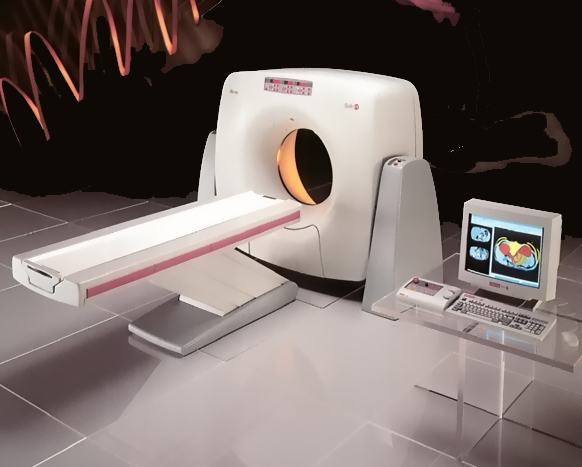
This thought might be followed by more musings such as "Who would want a CT scanner? ... Could they really sell it somewhere to get money? ...How would someone in that market even how to set up the electronics for such a complicated machine?" And so on.
These thoughts reveal our ignorance and disbelief of the extent and inner workings of theft and crime. However, when compared to the first thoughts of a South African medical student, they also provide a sobering commentary.
Their thought process starts the same as ours: "That can't possibly be true!"
"Exactly!" we think as we ready ourselves to discuss the logistics of stealing the machine. But then their insight unexpectedly changes course and leaves us, well, speechless and contemplative even though the comment was merely intended for and succeeded at bringing out a chuckle from the group:
"...There is no way a SA public hospital EVER had a CT scanner!"
Thursday, January 28, 2010
The TRUTH about South Africa
I admittedly have failed as a foreign correspondent to the masses awaiting my reports of living abroad in this wonderful and backwards place. Ok. Admittedly, the proceeding sentence was a gross exaggeration from start to finish. "Foreign correspondent" = blogger. "Masses"= friends and family. "wonderful and backwards"= ... well, let me get to that.
The one word that actually might be true is Failed. Failed I have. It has been extremely difficult for me to write. I have started a few essays and, in despair, gave up usually less than halfway through unsure of why everything just sounds wrong, why my fingers just freeze up at the keyboard as I stare blankly at the screen. It seems I can’t focus on summoning the force necessary to pull the thoughts out of my mind and, simultaneously, navigate the through the words on the page. It is exhausting. (Picture me as Sesame Street’s Don Music ending his masterpiece composition by banging his head on his piano keyboard in frustration, “I’ll NEVER get it right!”)

And there is already a lot of banging your head in frustration South Africa! And even more exhaustion. So I think I’ve chosen to avoid the frustration and exhaustion that would come from writing about the day-to-day frustration and exhaustion. Having said that, my New Year’s resolution was to write- to post blogs for the people who are interested, and to journal as a reference for my future book (which my mentor/preceptor has already entitled “Trials and Tribulations in South Africa: a series of short and not-so-short stories from Andrea Dean.” This was right before she officially crowned me the most unlucky Yale-associated student ever to grace University of Pretoria. A position I feel honored- amongst other emotions- to hold considering one of the last students had her car stolen.) So it is now January 28th and I am attempting to write, my surgery providing a legitimate excuse for the late start. I suppose it isn’t so bad. At least it is the opposite of the gym-goers who start Jan 1st and are only now gradually letting you annoyed regulars have your treadmills and free-weights back. I can still follow through.
Before I started writing, I needed to think about why I couldn’t write. I love to write. I thrive on it. It keeps me sharp and sane. But here, why couldn’t I do it?
My answer began to reveal itself as I began reading Rian Malan’s more recent book “Resident Alien.”
(Note: Some of you know Malan’s “My Traitor’s Heart” which I read as a junior undergraduate student and again during my time in Namibia when my class was able to meet him briefly only to be, quite frankly, unimpressed by his blasé and seemingly sour character. Nevertheless, as a white (half Afrikaans and half English) male who lived through the height and fall of apartheid, Malan presented a view of South Africa that was unlike all others. It wasn’t hateful, but was not an outpouring of blind compassion either. It wasn’t unrevealing of the errors of the country, but it wasn’t full of desperation either. It wasn’t graceful. It wasn’t angsty. It wasn’t cold. What was it?. I often cursed Malan for his negativity, yet somehow he resonated with me. I admired him in spite of myself. All this unconsciously, in a paradox I'm not sure I could appreciate at the time. A paradox I now understand as, well, “South Africa.”)
As I opened Malan’s introduction, he started by quoting an American journalist friend who said “No one can write fast enough to tell a true story.” I paused to roll my eyes. It brought to mind college hill in Providence, where colored plastic body parts are wrapped around tree trunks in the name of art and hipsters in tight jeans are scattered along the sidewalk, where I’ve been known to mutter “Fucking RISD students” as I drive past. But Malan was a step ahead of me.
His next paragraph starts, “In America, this is an artsy verdict on the limitations of the form. In South Africa, it’s like a law of nature: there is no such thing as a true story here. The facts might be correct, but the truth they embody is always a lie to someone else… Atop all this, we live in a country where mutually annihilating truths coexist entirely amicably. We are a light unto nations. We are an abject failure. We are progressing even as we hurtle backward. The blessing of living here is that every day presents you with material whose richness beggars the imagination of those who live in saner places. The curse is that you can never, ever get it quite right, and if you get it close, the results are unpublishable.”
At this point I pictured Malan banging his head on his typewriter (I still picture all journalists with typewriters) and crying “I’ll never get it right!” and I thought of Don Music at his piano and I thought of me at my laptop… and I knew Malan was onto something.

I won’t try to rephrase Malan because he nailed it- this confusing and impossible experience that is South Africa. I want to write about everything, but nothing I write will actually be worthwhile.
I can’t bring you the usually sentiments from the third-world, the ones about the injustice of dire poverty, the ones that I used to spit out like rapid fire when I went abroad, the ones that make you feel connected to something you’ll never actually know. (Though I have some of those.)
And I can’t bring you tales of the rainbow-nation, the ones about progress that is thick in the air, the ones that make us believe in humanity, the ones that leave us feeling hopeful for the future. (Though I have some of those.)
I can’t bring you the stories of being in what appears to be persistent apartheid South Africa, the ones where people are full of hate and fear, the ones where we curse the powerful, rich, white men, the ones that make us assess our own privilege. (Though I have some of those.)
… and the list of “some of those” could go on…
The problem is, I can’t write one without writing the others. I can’t even tell one story separate from the others. In this country, they are intertwined, co-experienced, fluid, yet persistent, all are alive in every moment, moving, but not changing. Where in most places, to tell the partial story is merely inadequate, here i in South Africa, the partial story fares much worse. It is a lie.
Perhaps even at a deeper level than suggested by Malan, I don’t even feel comfortable relaying the facts. It seems straightforward enough to transcribe the series of events which happened when I was mugged, or I travelled to Kruger National Park, or I started work in Kalafong Hospital, or any other adventure. But even these facts are confusing and impossible on their own. On their own, these facts are untrue. Without including the subjective (the fear, the guilt, the intrigue, the anger) the objective does not exists.
Art is about expressing the subjective, which naturally fluctuates with experience and time (as it is to be human.) This task is not entirely difficult under normal circumstances. But South Africa, things are different because not only is the subjective fluid, but the objective moves quickly and erratically. The subjective chases it around, flapping its wings breathlessly and rarely lands long enough to see and appreciate it, much less capture it or describe it in words.
I realize this blog says nothing. That is ok with me. I am using today to premise what will come, since request have been made. I’ll try for at least some small stories, antidotes if you will, probably seemingly without substance. But I assure you, it is in these short stories (ones that take less than 15 minutes to write) that truth lies and only in them that I can accurately record at least a hint of my experience. I’ll do my best…
“We yaw between terror and ecstasy. Sometimes we complete the round trip in just fifteen minutes.” –Rian Malan.
The one word that actually might be true is Failed. Failed I have. It has been extremely difficult for me to write. I have started a few essays and, in despair, gave up usually less than halfway through unsure of why everything just sounds wrong, why my fingers just freeze up at the keyboard as I stare blankly at the screen. It seems I can’t focus on summoning the force necessary to pull the thoughts out of my mind and, simultaneously, navigate the through the words on the page. It is exhausting. (Picture me as Sesame Street’s Don Music ending his masterpiece composition by banging his head on his piano keyboard in frustration, “I’ll NEVER get it right!”)

And there is already a lot of banging your head in frustration South Africa! And even more exhaustion. So I think I’ve chosen to avoid the frustration and exhaustion that would come from writing about the day-to-day frustration and exhaustion. Having said that, my New Year’s resolution was to write- to post blogs for the people who are interested, and to journal as a reference for my future book (which my mentor/preceptor has already entitled “Trials and Tribulations in South Africa: a series of short and not-so-short stories from Andrea Dean.” This was right before she officially crowned me the most unlucky Yale-associated student ever to grace University of Pretoria. A position I feel honored- amongst other emotions- to hold considering one of the last students had her car stolen.) So it is now January 28th and I am attempting to write, my surgery providing a legitimate excuse for the late start. I suppose it isn’t so bad. At least it is the opposite of the gym-goers who start Jan 1st and are only now gradually letting you annoyed regulars have your treadmills and free-weights back. I can still follow through.
Before I started writing, I needed to think about why I couldn’t write. I love to write. I thrive on it. It keeps me sharp and sane. But here, why couldn’t I do it?
My answer began to reveal itself as I began reading Rian Malan’s more recent book “Resident Alien.”
(Note: Some of you know Malan’s “My Traitor’s Heart” which I read as a junior undergraduate student and again during my time in Namibia when my class was able to meet him briefly only to be, quite frankly, unimpressed by his blasé and seemingly sour character. Nevertheless, as a white (half Afrikaans and half English) male who lived through the height and fall of apartheid, Malan presented a view of South Africa that was unlike all others. It wasn’t hateful, but was not an outpouring of blind compassion either. It wasn’t unrevealing of the errors of the country, but it wasn’t full of desperation either. It wasn’t graceful. It wasn’t angsty. It wasn’t cold. What was it?. I often cursed Malan for his negativity, yet somehow he resonated with me. I admired him in spite of myself. All this unconsciously, in a paradox I'm not sure I could appreciate at the time. A paradox I now understand as, well, “South Africa.”)
As I opened Malan’s introduction, he started by quoting an American journalist friend who said “No one can write fast enough to tell a true story.” I paused to roll my eyes. It brought to mind college hill in Providence, where colored plastic body parts are wrapped around tree trunks in the name of art and hipsters in tight jeans are scattered along the sidewalk, where I’ve been known to mutter “Fucking RISD students” as I drive past. But Malan was a step ahead of me.
His next paragraph starts, “In America, this is an artsy verdict on the limitations of the form. In South Africa, it’s like a law of nature: there is no such thing as a true story here. The facts might be correct, but the truth they embody is always a lie to someone else… Atop all this, we live in a country where mutually annihilating truths coexist entirely amicably. We are a light unto nations. We are an abject failure. We are progressing even as we hurtle backward. The blessing of living here is that every day presents you with material whose richness beggars the imagination of those who live in saner places. The curse is that you can never, ever get it quite right, and if you get it close, the results are unpublishable.”
At this point I pictured Malan banging his head on his typewriter (I still picture all journalists with typewriters) and crying “I’ll never get it right!” and I thought of Don Music at his piano and I thought of me at my laptop… and I knew Malan was onto something.

I won’t try to rephrase Malan because he nailed it- this confusing and impossible experience that is South Africa. I want to write about everything, but nothing I write will actually be worthwhile.
I can’t bring you the usually sentiments from the third-world, the ones about the injustice of dire poverty, the ones that I used to spit out like rapid fire when I went abroad, the ones that make you feel connected to something you’ll never actually know. (Though I have some of those.)
And I can’t bring you tales of the rainbow-nation, the ones about progress that is thick in the air, the ones that make us believe in humanity, the ones that leave us feeling hopeful for the future. (Though I have some of those.)
I can’t bring you the stories of being in what appears to be persistent apartheid South Africa, the ones where people are full of hate and fear, the ones where we curse the powerful, rich, white men, the ones that make us assess our own privilege. (Though I have some of those.)
… and the list of “some of those” could go on…
The problem is, I can’t write one without writing the others. I can’t even tell one story separate from the others. In this country, they are intertwined, co-experienced, fluid, yet persistent, all are alive in every moment, moving, but not changing. Where in most places, to tell the partial story is merely inadequate, here i in South Africa, the partial story fares much worse. It is a lie.
Perhaps even at a deeper level than suggested by Malan, I don’t even feel comfortable relaying the facts. It seems straightforward enough to transcribe the series of events which happened when I was mugged, or I travelled to Kruger National Park, or I started work in Kalafong Hospital, or any other adventure. But even these facts are confusing and impossible on their own. On their own, these facts are untrue. Without including the subjective (the fear, the guilt, the intrigue, the anger) the objective does not exists.
Art is about expressing the subjective, which naturally fluctuates with experience and time (as it is to be human.) This task is not entirely difficult under normal circumstances. But South Africa, things are different because not only is the subjective fluid, but the objective moves quickly and erratically. The subjective chases it around, flapping its wings breathlessly and rarely lands long enough to see and appreciate it, much less capture it or describe it in words.
I realize this blog says nothing. That is ok with me. I am using today to premise what will come, since request have been made. I’ll try for at least some small stories, antidotes if you will, probably seemingly without substance. But I assure you, it is in these short stories (ones that take less than 15 minutes to write) that truth lies and only in them that I can accurately record at least a hint of my experience. I’ll do my best…
“We yaw between terror and ecstasy. Sometimes we complete the round trip in just fifteen minutes.” –Rian Malan.
Wednesday, December 9, 2009
Back in America, the hate lives on.
Apparently, my other life needs me too.
http://www.nytimes.com/2009/05/19/health/19well.html
http://www.nytimes.com/2009/05/19/health/19well.html
Sunday, November 8, 2009
Lions with a touch of cynicism.
I, admittedly, do not blog. I know this disappoints some people. I am lazy. And busy. And I find myself tiresome when I do write. However, this week I am going for a photo story. Let us consider it a compromise.
In order to help remember that South Africa is not a just a place to go to have your research plan fall apart, lose touch with friends from home and get your passport stolen, I got out this weekend. We went to the Lion and Rhino Nature Reserve just outside Johannesburg. It was phenomenal.

1. "Dumb Human." This photo is blurry, but included here because this is the cheetah I raced. I actually won. This is because the cheetah was smart and stubborn as cats tend to be and simply chose not to chase the blue teddy bear which was being pulled on a string in 32 degree weather. I, on the other hand, apparently could wear a collar and be trained to sit. My defense: it WAS a really cute teddy bear.

2. "Don't f' with me. I have a snake." Evidence that having huge snake around your neck will always make you look badass and like you could kill someone. Even if you are making out with said snake. Seeing this photo makes me reconsider my lack of a skull tattoo on that right bicep.

3. "Gurltalk." This white lion is my new best friend. As you can see, she and I had a heart to heart and discussed a range of topics including the US joining SA in the ranks of leaders who've won the Peace Prize, Impala versus Kudoo meat, and men of all nations who aren't good enough for us anyway.

4."A good spoon." Is there anything more to say?

5. "Ouch. I have nerves there." This tiger was playful. And had huge claws. They felt un-good in my skin. But I couldn't resist.

6. "Adopting This One." In the end, I opted not to bring her home. She was 2 months old. Its only a matter of months before she would be able to give Socrates a run for his money. And I can't do that to Soc's ego.
I should add that I almost got eaten by a lion. Seriously. Ok. At least bitten. Other highlights included: Petting a rhino; Watching the cheetahs in the reserve get fed- man do they jump high; Falling down a hill; Teaching my Brazilians English words such as "Mane," "calling shotgun," and "charge"- as in "Keep driving. That rhino looks like he might 'charge' the car;" The hippo walk; Hearing wild dogs 'laugh'; Having a full grown male lion feet from my car; And drinking almost a liter of orange Fanta. The day was actually quite amazing. I needed it badly.
Getting mugged and attacked by a lion... in the span of one week... now THAT is South Africa.
In order to help remember that South Africa is not a just a place to go to have your research plan fall apart, lose touch with friends from home and get your passport stolen, I got out this weekend. We went to the Lion and Rhino Nature Reserve just outside Johannesburg. It was phenomenal.

1. "Dumb Human." This photo is blurry, but included here because this is the cheetah I raced. I actually won. This is because the cheetah was smart and stubborn as cats tend to be and simply chose not to chase the blue teddy bear which was being pulled on a string in 32 degree weather. I, on the other hand, apparently could wear a collar and be trained to sit. My defense: it WAS a really cute teddy bear.

2. "Don't f' with me. I have a snake." Evidence that having huge snake around your neck will always make you look badass and like you could kill someone. Even if you are making out with said snake. Seeing this photo makes me reconsider my lack of a skull tattoo on that right bicep.

3. "Gurltalk." This white lion is my new best friend. As you can see, she and I had a heart to heart and discussed a range of topics including the US joining SA in the ranks of leaders who've won the Peace Prize, Impala versus Kudoo meat, and men of all nations who aren't good enough for us anyway.

4."A good spoon." Is there anything more to say?

5. "Ouch. I have nerves there." This tiger was playful. And had huge claws. They felt un-good in my skin. But I couldn't resist.

6. "Adopting This One." In the end, I opted not to bring her home. She was 2 months old. Its only a matter of months before she would be able to give Socrates a run for his money. And I can't do that to Soc's ego.
I should add that I almost got eaten by a lion. Seriously. Ok. At least bitten. Other highlights included: Petting a rhino; Watching the cheetahs in the reserve get fed- man do they jump high; Falling down a hill; Teaching my Brazilians English words such as "Mane," "calling shotgun," and "charge"- as in "Keep driving. That rhino looks like he might 'charge' the car;" The hippo walk; Hearing wild dogs 'laugh'; Having a full grown male lion feet from my car; And drinking almost a liter of orange Fanta. The day was actually quite amazing. I needed it badly.
Getting mugged and attacked by a lion... in the span of one week... now THAT is South Africa.
Wednesday, October 21, 2009

Monday, October 12, 2009
Donate your old cell phone: Help Mothers Save Babies
My research in South Africa involves running a support group for HIV-infected mothers via SMS (text messaging.) I need cell phones and hope you can help. Here is where, why and how it will help:
Antenatal care in South Africa, especially the Prevention of Mother-to-Child of HIVTransmission (PMTCT) program, is a perfect illustration of the complexity of HIV as a disease and, more so, the critical need for creativity in strategies to approach this epidemic. Amongst women seeking antenatal care in the country, between 30% to 40% are infected with HIV, most of these women seek care in the public (read “resource-poor, understaffed, overcrowded”) sector. Without proper PMTCT treatment, 30% of these women will have HIV-infected infant; this number rises exponentially in the first year of the child’s life if feeding guidelines are not followed. To put this in perspective, in United States, transmission is less that 1%, evidence that this number is obtainable with appropriate provision of antiretrovirals (ARV), c-sections and bottle feeding.
However, South Africa is our reminder that “medicine” entails more than throwing algorithms and a stocked pharmacy into a clinic. Currently in Southwest Tshwane, where all pregnant women theoretically have access to PMTCT, the transmission rate is greater than 15% (still lower than the national average.) To put this in perspective, in Pretoria alone, 200 babies are born every month with HIV. 200. Babies. One city. HIV.
So the question is, why are these programs failing? Why mothers leaving orphaned children when we have the ARVs to give them? Why are we routinely forcing children born into a life of chronic disease and ARV treatment? Or worse, needlessly watching them die before they reach their second birthdays?
The answer is scattered between society at large, the health care system, the strained clinics and health care workers, and, of course, the affect these things have on the behavior of individuals.
First of all, let us remember that PMTCT, like ARV therapy and highly active ARV therapy (HAART) in nonpregnant persons, is a demanding medical regimen to maintain over a period of time. Not only do the medications often produce harsh side effects and need to be taken multiple times a day, but it also requires constant follow up visits at the clinic during pregnancy and afterward. All of the components of PMTCT, which should be completed on a specific time line, face all the challenges of health care delivery in resource poor settings: lack of transport to visits, impossible waiting times, exhausted staff, problems with continuity and records of care, lack of a system to track patients, communication and education issues, space shortages, etc. These are all system issues being addressed in the Serithi Project (the larger research project I work on) but this is not enough.
Even in a perfect health care setting in South Africa, PMTCT could not function optimally. HIV is still highly stigmatized. Women who disclose their status are often kicked out of their homes or rejected by their families. Individuals do not want to be tested and, even if treatment is available, do not take it for reasons of denial or secrecy. Like other chronic (and fatal) diseases psychosocial factors faced by HIV-positive individuals run deeply, lead to social isolation and make adherence to PMTCT (including going to follow up visits or having their child tested) logistically, as well as emotionally, challenging. Indeed, the work of my preceptors and others have sought to describe phenomena such as stigmatization, disclosure status, social support, depression, self efficacy and coping styles and their possible effects on adherence to HIV treatment regimens in Southern Africa. Not surprisingly, these studies on what are known as “possible mediating factors of adherence” indicate that without addressing psychosocial factors, PMTCT fails.
In the Serithi Project workshops for health care workers which I sat in all last week, the participants were asked to brainstorm barriers to delivery of and adherence to PMTCT and then to come up with possible solutions (This is called participatory action research and seeks to give the health care workers ownership over their intervention.) Over and over in these workshops, I heard these wonderfully committed and passionate staff speak with sadness in their voice about the impact of stigmatization and the need to encourage women to disclose their status. Each workshop group wished they had more time and personnel to provide women with more counseling and one-on-one support as well as create support groups to help women struggling with PMTCT.
However, traditional “onsite” support groups just are not feasible in resource-poor settings. As stated above by the workers themselves, there just is not enough time, space or staff to implement them. In regards to patients themselves, pregnant women and new mothers have issues with transport, scheduling conflicts, lack of child care, and discomfort in the third trimester and/or the birth of the child, often forcing her to leave the group. But most notably, onsite groups fail to reach the most socially isolated women. Women with undisclosed status or great fear of stigmatization are likely concerned about breeches of confidentiality by peers in the group and are the least ready to partake in discussion. Therefore, these women often decline participation in .the groups and we miss an opportunity to support a woman who needs it most.
Here is where I come in!
My research project aims to evaluate the feasibility and acceptability of a pilot intervention using text messaging (SMS) as a means for social networking among HIV positive pregnant women in South Africa. Basically, I am running a support group for which functions solely through SMS. The technical stuff is sort of involved, but here are the basics: I am using UK-based software (ZygoHUBS) that allows a group of individuals to be simultaneously connected through SMS. Each participant will be given a phone enabled to send unlimited SMSs to a single number. When an SMS is sent to this number it is directed it to the Zygos database (specific to that number) which will then turn it around and deliver it to all the members of the given preset group. Responses will likewise be sent by SMS to the entire group. Think of it like a walkie talkie radio system except with short written messages instead of spoken and the frequency is the phone number assigned to the group’s database. So in this way, the conversation will function much like one would during a traditional on-site support group.
The idea of the intervention, like other support groups, is to bring together peers with a particular shared experience to empower, educate and support each other through dialogue. Each group will be of 8 women newly diagnosed with HIV and undergoing PMTCT, one “experienced mentor”- a woman who already went through PMTCT, and a “clinician”-who will likely be a resident or a psychology grad student with backup from a medical practitioner. The group will ideally provide an outlet to discuss psychosocial issues such as fear and stigma, converse freely about health and pregnancy, ask questions and be reminded about various components of PMTCT, hear others’ stories and learn from their choices and experiences. A similar project, Project Zumbido in Mexico, is our model and was an amazing success.
The idea is that these SMS-based peer-support groups allow for constant social support and daily peer contact while avoiding issues of transportation, childcare, scheduling or lack of clinic space or staff. Most importantly, using the aforementioned software, all discussion will take place under “code names” (on phones registered to the project,) so women will remain anonymous to each other throughout the intervention. Therefore, it is less confrontational that a regular support group and participation is completely confidentiality.
Ultimately, the goal of my intervention is to improve adherence to PMTCT and therefore decrease the HIV transmission to infants. Right now, I am working solely to provide evidence that the intervention is feasible in Tshwane, South Africa and using qualitative methods to evaluate what effect it had on women's experience with HIV and PMTCT. Ideally I will provide early evidence of the potential efficacy of the intervention by comparing measurements of before and after psychosocial factors (the “possible mediating factors of adherence”) and using records to assess PMTCT adherence. Basically though, this part of the study is to get the intervention up and running so that I can go to put it in the face of foundations and phone companies face and ask for money and involvement! Fun!
The point of all this is to show you how your old mobile phone could save a baby. (At least that is how they would say it if this was an infomercial for adopting kids from Thailand or something.) But really, I need 20 mobile phones by November. Your single phone will be a HUGE help to the me and to the project. The phones do need to be GSM phones (they need to have a removeable SIM card,) so no Sprint or Verizon. (We'll be able to unlock it to use local SIM cards here.) Compatible chargers are also appreciated, but we can buy them if you don't have one. If you have a mobile phone to donate, please send it or give it to my mom (or if you are in Providence, give it to Jason) who will collect them. My preceptor will bring them to S. Africa when he comes in November.
Susan Lach
15834 50th Ave N
Plymouth, MN
55446
You can email me or comment here if you have any questions! I appreciate all your help!
Antenatal care in South Africa, especially the Prevention of Mother-to-Child of HIVTransmission (PMTCT) program, is a perfect illustration of the complexity of HIV as a disease and, more so, the critical need for creativity in strategies to approach this epidemic. Amongst women seeking antenatal care in the country, between 30% to 40% are infected with HIV, most of these women seek care in the public (read “resource-poor, understaffed, overcrowded”) sector. Without proper PMTCT treatment, 30% of these women will have HIV-infected infant; this number rises exponentially in the first year of the child’s life if feeding guidelines are not followed. To put this in perspective, in United States, transmission is less that 1%, evidence that this number is obtainable with appropriate provision of antiretrovirals (ARV), c-sections and bottle feeding.
However, South Africa is our reminder that “medicine” entails more than throwing algorithms and a stocked pharmacy into a clinic. Currently in Southwest Tshwane, where all pregnant women theoretically have access to PMTCT, the transmission rate is greater than 15% (still lower than the national average.) To put this in perspective, in Pretoria alone, 200 babies are born every month with HIV. 200. Babies. One city. HIV.
So the question is, why are these programs failing? Why mothers leaving orphaned children when we have the ARVs to give them? Why are we routinely forcing children born into a life of chronic disease and ARV treatment? Or worse, needlessly watching them die before they reach their second birthdays?
The answer is scattered between society at large, the health care system, the strained clinics and health care workers, and, of course, the affect these things have on the behavior of individuals.
First of all, let us remember that PMTCT, like ARV therapy and highly active ARV therapy (HAART) in nonpregnant persons, is a demanding medical regimen to maintain over a period of time. Not only do the medications often produce harsh side effects and need to be taken multiple times a day, but it also requires constant follow up visits at the clinic during pregnancy and afterward. All of the components of PMTCT, which should be completed on a specific time line, face all the challenges of health care delivery in resource poor settings: lack of transport to visits, impossible waiting times, exhausted staff, problems with continuity and records of care, lack of a system to track patients, communication and education issues, space shortages, etc. These are all system issues being addressed in the Serithi Project (the larger research project I work on) but this is not enough.
Even in a perfect health care setting in South Africa, PMTCT could not function optimally. HIV is still highly stigmatized. Women who disclose their status are often kicked out of their homes or rejected by their families. Individuals do not want to be tested and, even if treatment is available, do not take it for reasons of denial or secrecy. Like other chronic (and fatal) diseases psychosocial factors faced by HIV-positive individuals run deeply, lead to social isolation and make adherence to PMTCT (including going to follow up visits or having their child tested) logistically, as well as emotionally, challenging. Indeed, the work of my preceptors and others have sought to describe phenomena such as stigmatization, disclosure status, social support, depression, self efficacy and coping styles and their possible effects on adherence to HIV treatment regimens in Southern Africa. Not surprisingly, these studies on what are known as “possible mediating factors of adherence” indicate that without addressing psychosocial factors, PMTCT fails.
In the Serithi Project workshops for health care workers which I sat in all last week, the participants were asked to brainstorm barriers to delivery of and adherence to PMTCT and then to come up with possible solutions (This is called participatory action research and seeks to give the health care workers ownership over their intervention.) Over and over in these workshops, I heard these wonderfully committed and passionate staff speak with sadness in their voice about the impact of stigmatization and the need to encourage women to disclose their status. Each workshop group wished they had more time and personnel to provide women with more counseling and one-on-one support as well as create support groups to help women struggling with PMTCT.
However, traditional “onsite” support groups just are not feasible in resource-poor settings. As stated above by the workers themselves, there just is not enough time, space or staff to implement them. In regards to patients themselves, pregnant women and new mothers have issues with transport, scheduling conflicts, lack of child care, and discomfort in the third trimester and/or the birth of the child, often forcing her to leave the group. But most notably, onsite groups fail to reach the most socially isolated women. Women with undisclosed status or great fear of stigmatization are likely concerned about breeches of confidentiality by peers in the group and are the least ready to partake in discussion. Therefore, these women often decline participation in .the groups and we miss an opportunity to support a woman who needs it most.
Here is where I come in!
My research project aims to evaluate the feasibility and acceptability of a pilot intervention using text messaging (SMS) as a means for social networking among HIV positive pregnant women in South Africa. Basically, I am running a support group for which functions solely through SMS. The technical stuff is sort of involved, but here are the basics: I am using UK-based software (ZygoHUBS) that allows a group of individuals to be simultaneously connected through SMS. Each participant will be given a phone enabled to send unlimited SMSs to a single number. When an SMS is sent to this number it is directed it to the Zygos database (specific to that number) which will then turn it around and deliver it to all the members of the given preset group. Responses will likewise be sent by SMS to the entire group. Think of it like a walkie talkie radio system except with short written messages instead of spoken and the frequency is the phone number assigned to the group’s database. So in this way, the conversation will function much like one would during a traditional on-site support group.
The idea of the intervention, like other support groups, is to bring together peers with a particular shared experience to empower, educate and support each other through dialogue. Each group will be of 8 women newly diagnosed with HIV and undergoing PMTCT, one “experienced mentor”- a woman who already went through PMTCT, and a “clinician”-who will likely be a resident or a psychology grad student with backup from a medical practitioner. The group will ideally provide an outlet to discuss psychosocial issues such as fear and stigma, converse freely about health and pregnancy, ask questions and be reminded about various components of PMTCT, hear others’ stories and learn from their choices and experiences. A similar project, Project Zumbido in Mexico, is our model and was an amazing success.
The idea is that these SMS-based peer-support groups allow for constant social support and daily peer contact while avoiding issues of transportation, childcare, scheduling or lack of clinic space or staff. Most importantly, using the aforementioned software, all discussion will take place under “code names” (on phones registered to the project,) so women will remain anonymous to each other throughout the intervention. Therefore, it is less confrontational that a regular support group and participation is completely confidentiality.
Ultimately, the goal of my intervention is to improve adherence to PMTCT and therefore decrease the HIV transmission to infants. Right now, I am working solely to provide evidence that the intervention is feasible in Tshwane, South Africa and using qualitative methods to evaluate what effect it had on women's experience with HIV and PMTCT. Ideally I will provide early evidence of the potential efficacy of the intervention by comparing measurements of before and after psychosocial factors (the “possible mediating factors of adherence”) and using records to assess PMTCT adherence. Basically though, this part of the study is to get the intervention up and running so that I can go to put it in the face of foundations and phone companies face and ask for money and involvement! Fun!
The point of all this is to show you how your old mobile phone could save a baby. (At least that is how they would say it if this was an infomercial for adopting kids from Thailand or something.) But really, I need 20 mobile phones by November. Your single phone will be a HUGE help to the me and to the project. The phones do need to be GSM phones (they need to have a removeable SIM card,) so no Sprint or Verizon. (We'll be able to unlock it to use local SIM cards here.) Compatible chargers are also appreciated, but we can buy them if you don't have one. If you have a mobile phone to donate, please send it or give it to my mom (or if you are in Providence, give it to Jason) who will collect them. My preceptor will bring them to S. Africa when he comes in November.
Susan Lach
15834 50th Ave N
Plymouth, MN
55446
You can email me or comment here if you have any questions! I appreciate all your help!
Monday, October 5, 2009


Monday, September 14, 2009
American Accent
Today I was inspired to post my first real blog ever to update any interested souls on my progress here in
The background music: “
I couldn't help but laugh and it was by far the most pleasant 4 minutes spent on hold all day. It also gave me the courage to finally stop cycle of the ritual polite exchange, which would inevitably lead to the brief explanation of my project, then to the confused pause, and then to the transfer. When the next woman picked up, I finally just said “I need to be in touch whoever would be in charge of potential partnerships or the possibility of innovative technology.” Apparently, said in an American accent, “innovative technology” has a certain authority, or maybe charm, to it and I was immediately transferred to a fellow who is going to get the company to help me with my project.
Life is good. I thank Toto.
It has been a full three weeks and I think I can now consider myself “settled.” I am already in the habit of the “How is it?” greeting before any real exchange of information, I drive a manual on the left side of the road in traffic worse than
I’ll admit, moving to a new country is frustrating. Nothing can be done smoothly since I have no knowledge of how the most basic stuff works. For the first week or so, there was one road block in front of another. Whether it is “I don’t think that is right,” (like needing South African health insurance to be a
So I’ve admitted that it is frustrating. However, it is also hilarious. Mostly, it is hilarious.
For example, one of my first quests was to get internet for my computer. The first exchange happened as I walked into a cell phone store where they sell phones, prepaid airtime cards, everything. These stores are quite common and are all very similar. It was a good place to start. After saying hello, I state simply, “I am looking for a modem which plugs into my computer and uses a SIM card to get internet.” They looked at me like I had two heads. I let a good few minutes to go by to allow them to get over the shock of my foreign accent and anything else that may have thrown them into a stupor- like the fact that I have an extra head. Then, one guy leaned onto the counter showing he was now intently focused on my words. I slowed down, “I have a laptop computer.” Head nods. “I need to use the internet on it.” Head nods. “From what I understand, there is some sort of device or modem which will plug into my laptop and allow me to go onto the internet.” More two-headed-girl stares. More silence. Suddenly, one guy’s face lights up. “OH!” he exclaims with eyebrows raised and a smile. He reaches to a shelf behind him and grabs a package. As he is handing it to me, I feel a sudden rush of joy and relief that I’ve connected with a human being and that, furthermore, I might get to have the internet. I grab the plastic and look down. It is a standard computer mouse. Not even the laser kind, the kind with the ball.
This is made even more hilarious by how simple this transaction should have been. I left that shop and walked into similar one a few doors down. They immediately pointed me in the direction of a computer shop who sold then me the modem. It did, however, take me an entire weekend to realize that, No, I did not have to storm back into the store and demand my money back for the bum modem they’d sold me, but that instead, I could just put the SIM card in right-side-up to get it to work.
The humor in these small things blows me away. Literally. My power adapter turned my miniature travel blow dryer into a hand held rocket jet,...complete with fire and the power of combustion. Though I nearly lost my face in the incident, I still laugh as I pick it up, aim it at my open window and dare, in a clicking-like language, the next human to try to get in. ... Ah yes. I’ve also seen “District 9” during my stay here. It is about aliens in
http://www.district9movie.com/
So contrary to what it may seem, I have not lost my mind. I am having a good time. I am indeed a little homesick sometimes- intensely when I try to explain that I became an “Auntie” a few days ago and then, at times, have to try the word “Nephew” with a few different intonations and even then sometimes get that look that tells me either (1) that I sound like a prawn or (2) that regardless of how I am speaking, I have grown another head in the midst of conversation. Even in these times of frustration or self-deprecating humor, I am so wildly happy to be here.... and so to South Africa I say, “Its gonna take a lot to take me away from you. Its nothing that a hundred men or more could ever do.”
Subscribe to:
Posts (Atom)